Planning a front-yard rock and mulch bed with boulders
The best front-yard beds are planned from the ground up, starting with what's underneath the rock and mulch.
October 8, 2026 · 4 min read
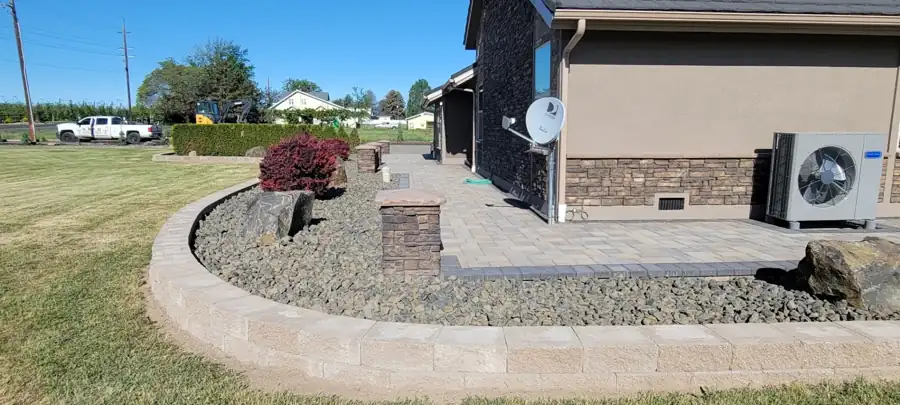
Start with the shape and the job
A front-yard bed has a job to do. It frames the house, hides the foundation line, softens a hard corner or fills a stretch of lawn that's more trouble than it's worth. Decide which of those you want before you pick a single plant. Then stand at the street and the front door and mark the outline with a hose. A bed that looks good from the driveway and awkward from the porch is a bed that needs another pass at the layout.
Size matters more than people expect. A thin strip of bed against the house reads as an afterthought, while a deeper bed with room for layers of plants and a few boulders looks intentional. Give yourself depth for a tall back row, a mid-height middle and low plants in front.
Prep the ground first
What happens under the rock and mulch decides how much weeding you'll do. Strip or kill the existing grass, loosen the soil where plants will go, and fix any low spots. If the bed sits against the house, confirm that the grade slopes away from the foundation and that downspouts and sprinkler overspray aren't aimed at the wall.
Weed barrier is a judgment call. Woven landscape fabric under rock helps keep stone from sinking into the soil and blocks a lot of weeds, and it still lets water through. Under mulch it's less useful, because mulch breaks down and weeds root in the top layer anyway, and fabric makes replanting a hassle. Whatever you choose, remember that no barrier is permanent: windblown dust and seeds collect on top, and some weeding is part of the deal.
Mulch or basalt rock
Wood mulch is soft, natural and good for the soil. It holds moisture, keeps roots cooler, and feeds the bed as it breaks down. The trade is upkeep: it fades, thins out and needs topping up, and in a windy valley it can wander. Rock stays put, doesn't rot and looks sharp for years, and basalt in particular suits the volcanic look of this region. The trade there is heat. Rock soaks up afternoon sun and radiates it back, so it's a poor match for tender plants on a hot south or west wall.
- Mulch suits: perennials, roses, shrubs that like cool roots, beds you plan to replant often.
- Rock suits: drought-tolerant plantings, windy sites, and areas where you want a permanent, low-maintenance surface.
- Mixing the two is fine: rock near hot pavement and boulders, mulch around plants that need cooler roots.
- Keep any mulch off the house siding and pulled back from plant stems and tree trunks.
- Use an edge or curb so the two materials stay separated and don't blend into the lawn.
Setting boulders so they look natural
Boulders weigh far more than they look, so plan for equipment, a clear path and a firm place to set them down. The trick to a natural look is burial. A boulder sitting on top of the soil looks dropped. One buried a third to a half of its height looks like it's been there for a thousand years. Choose the best face, tip it slightly so it sits as if it settled in place, and make sure it can't shift.
Group them in odd numbers and vary the size. One big anchor boulder with a couple of smaller companions beats a row of identical stones. Space them unevenly, and tuck plants around the base so they look planted into the landscape rather than placed on it. Keep boulders away from sprinkler heads, utility boxes and the house wall.
Plant spacing and layers
The most common mistake is planting for today's size. A shrub that fits in a one-gallon pot may spread several feet, and a bed planted to look full on day one will be a jungle in three years. Check the mature width on the plant tag and give each plant that room. Fill the gaps with mulch or rock for now, and let the plants fill in.
Group plants by water need so one irrigation zone can serve them. Put taller plants at the back or center, low mounds and groundcover at the edge, and a few evergreens for winter structure. Keep plants set back from the curb so they don't flop over it and block the mower's path.
Finish with the curb edge
A clean edge is what makes a bed look finished. A poured concrete curb holds rock and mulch in, keeps lawn grass out and gives the mower a guide to follow. If you're planning a curb, set it before the rock and mulch go in, and leave sleeves for irrigation lines. Size the bed so the lawn strip between curb and walk is wide enough for your mower deck.
Planning it with OMG
OMG Landscaping & Design designs and builds beds, curbing, boulder work, pavers and walls. Customer Jared Lingle wrote that their "attention to detail and quality of workmanship were exceptional." When one crew handles the grading, boulders, irrigation and planting, the bed gets built as a whole instead of in pieces.
To talk through a front-yard bed in Yakima, Selah or the surrounding valley, call (509) 307-8268 or use the contact page.
OMG Landscaping & Design LLC, (509) 307-8268
Call (509) 307-8268More articles
Concrete landscape curbing: what to decide before the pour
A poured curb is one of the few yard upgrades that makes weekly chores easier, but only if the layout suits your mower.
Planning a paver patio or fire-pit patio that stays level
A patio that looks great in year one and still looks great in year ten is mostly a story about what's underneath it.